
One Day, Two Years at MIT
Published:
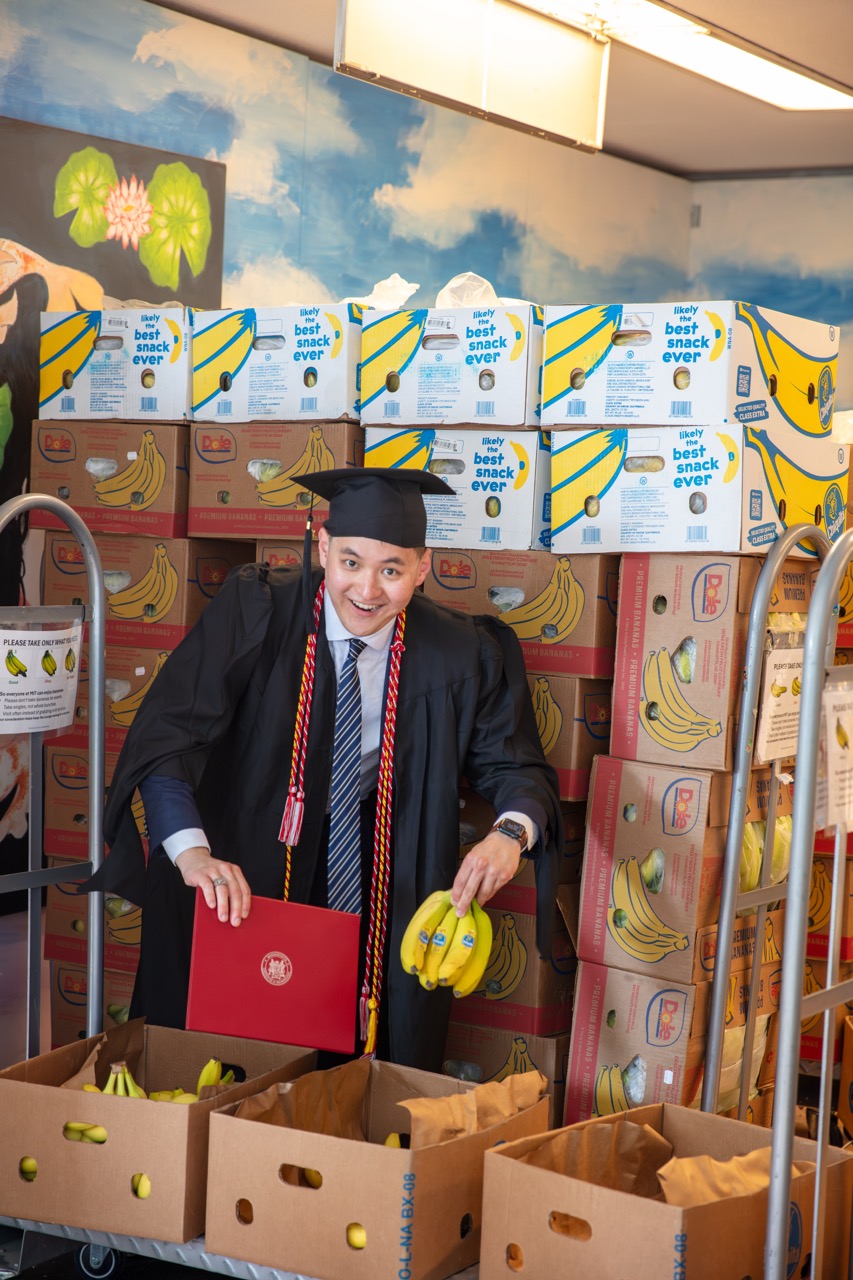
Two months ago, in May 2026, I somehow graduated from MIT four times.1 Somewhere in that run of ceremonies, in front of the Great Dome overlooking the Charles River, I listened to Dr. Lisa Su’s inspiring speech about being ambitious, solving hard problems, and finding ways to make luck. I also snacked one last time on bananas from the Banana Lounge. The final result was two degrees, an S.M. in EECS and an MBA, through the Leaders for Global Operations (LGO) program with a $100,000 fellowship.
This post also lives on my Substack — comment there, or subscribe to get future posts by email.
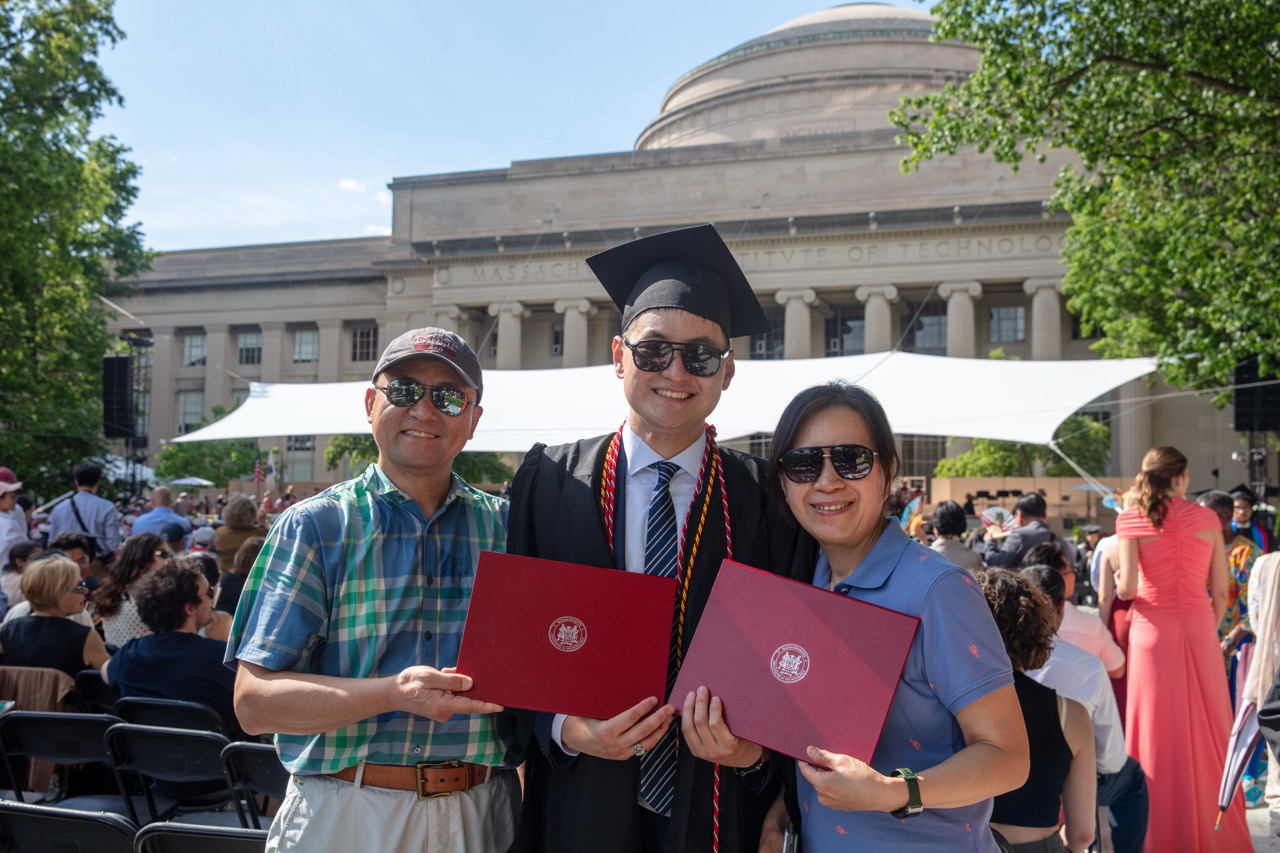
Since then, I have sat down for about half an hour every other day and tried to relive the previous 24 months. I have recorded monologues, chatted with prospective students, reread old essays, and gone back through small stories that would never make a graduation speech. I want to write them down before I get preempted by the “ambitious problem solving” I am taking on after graduation.
This post is my attempt to give those two years a proper conclusion.
Years from now, I want this post to bring me back to the MIT I experienced. I am also writing for the classmates who went through these two years with me, assuming you are not already tired of one more blog post from me. At least this one is not another tutorial about using LaTeX in VS Code or writing an MIT thesis, or another set of cheat sheets.
And finally, if you are interested in pursuing more school, especially mid-career, I hope you will find some interesting takes here.
Bird’s-Eye View
MIT’s Leaders for Global Operations (LGO) program began in 1988 as Leaders for Manufacturing (LFM), at a time when Japan and other overseas rivals were challenging U.S. manufacturing dominance2. The program has since evolved and expanded the range of students attracted to it. By the time I enrolled, the program appeared to be one of the most structured MS + MBA programs in the U.S., with a clearly defined timeline3.
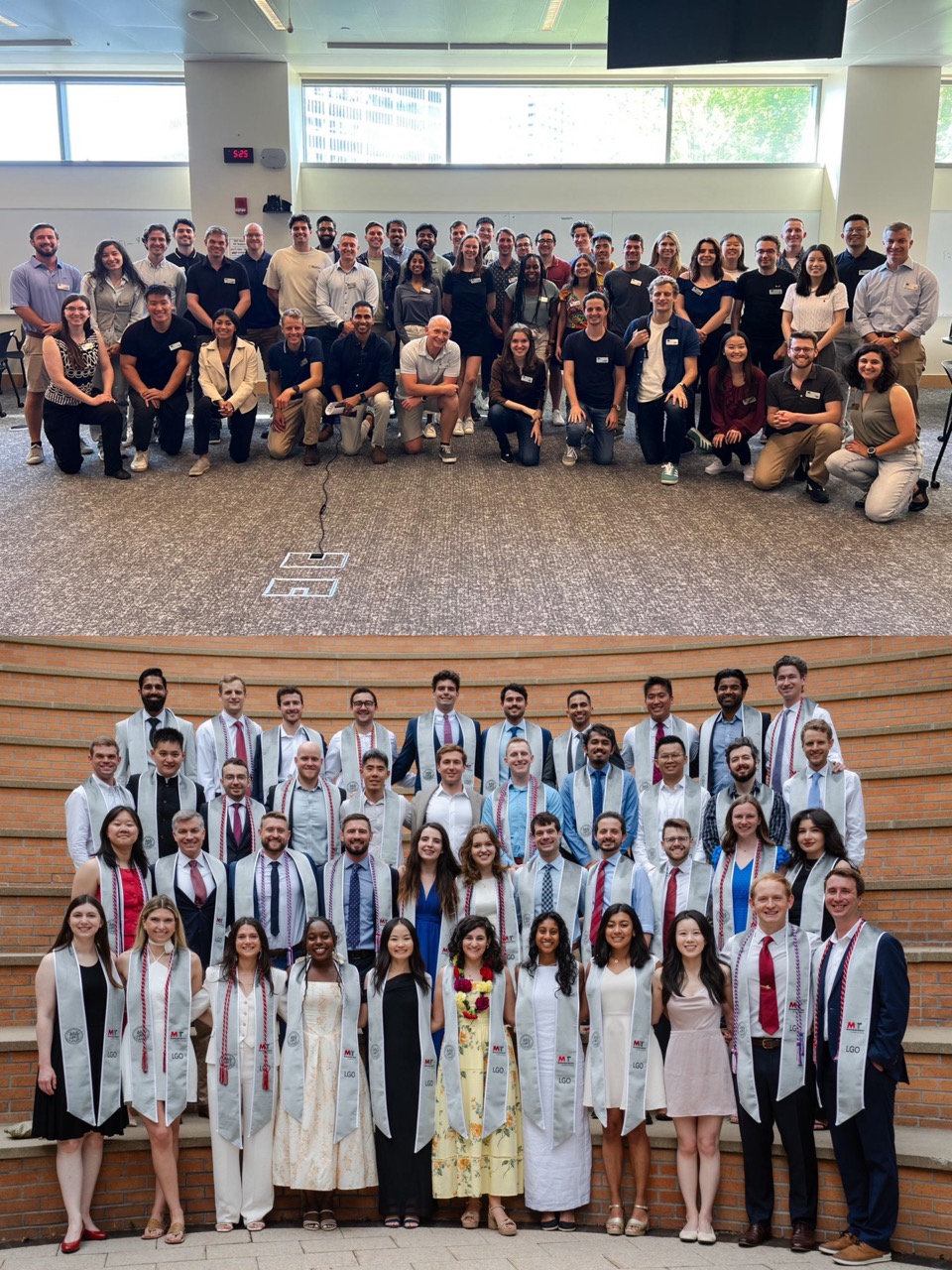
My LGO journey began in June 2024 with a highly structured summer semester attended only by the 45 students in the LGO Class of 2026. Over the summer, we quickly bonded while knocking out required classes that counted toward our dual-degree requirements. Then, in my first fall, I mixed the Sloan MBA core with engineering classes. I also became part of a roughly 70-student MBA cohort (Indian Ocean4, let’s go!) as all LGO students integrated into the regular MBA program. January brought a three-week domestic plant trek. After the following spring, I left for a six-month internship and thesis period, then came back for one final spring at MIT. My schedule never stayed the same for very long.
Well. Nevertheless, allow me to fabricate a “typical day.” Below, I stitched together a bike ride from one semester, classes and lunches from several others, and a late-night search that happened on one very specific Monday. Every scene happened, just not on the same day.
One Typical Day
8:15 A.M. - Vassar Street
During my first year, I lived on the far west side of campus. On mornings with an 8:30 class at Sloan, I usually left home with exactly enough time to bike there. I refused to skip breakfast, even after a late night. This meant I had only one remaining way to make up time: pedal faster.
I would get on my retro French road bike (my best investment at MIT) and ride east along Vassar Street. In winter, pristine snow covered the athletic field beside the road. The cold required the heaviest coat I had ever owned, a coat I had bought only after moving to Boston.
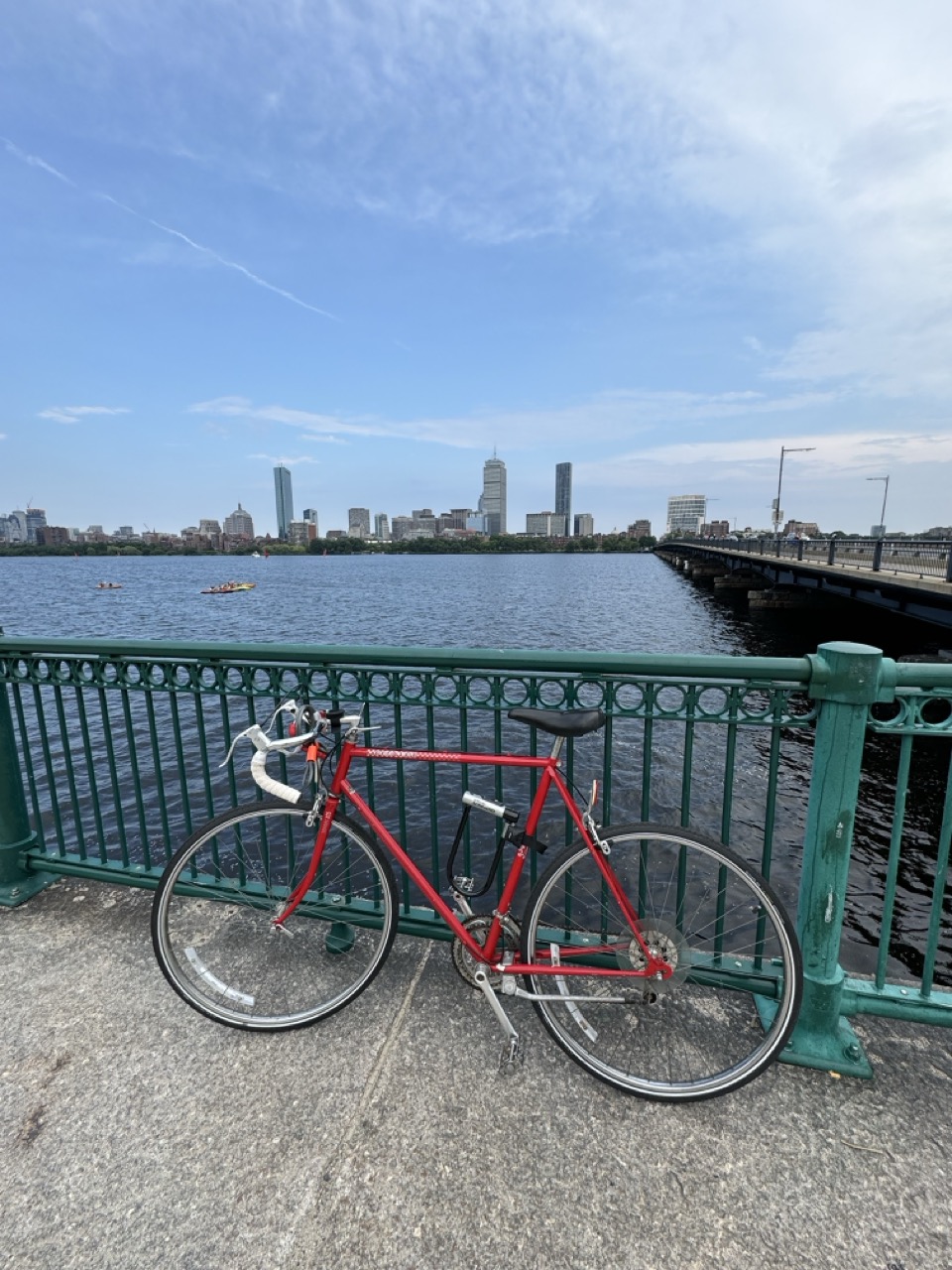

Most of my early Sloan classes took attendance, sometimes through a code shown in the room. Missing the code meant losing one of the easiest points in the class, so the morning ride was rarely scenic, though I still tried my best to enjoy it.
The LGO class ahead of us had also passed down a favorite expression: GDM, or “grades don’t matter.” When I first heard it during Summer Core, my reaction was basically: yes, I understand, but I still plan to try very hard.
By my final spring, I had fully adjusted my mindset. I still cared about doing good work, sometimes too much, but I became more judicious about where I spent my time and more comfortable missing a few points to attend to other priorities. I started asking whether that hour belonged on the current assignment at all. Maybe it should go to another class, office hours, dinner with someone, or sleep.
8:30 A.M. - How I Ended Up in an MBA Classroom
The MBA part of my morning requires some explanation because I did not originally set out to earn one.
After six years in industry, I started by looking for a master’s program in computer science. ChatGPT’s public arrival in late 2022 made the search feel more urgent. I had spent my career building voice AI products, and suddenly some technical assumptions that had felt durable no longer did. I wanted time to study what was changing underneath the products, and I didn’t want to watch the field move from the same seat.
Before making a full commitment, I gave student life a trial run. In 2023, I took Stanford’s CS221 course through Stanford Online. “Online” did not mean I watched a few videos after work. For one quarter, I attended lectures on the Stanford campus, went to office hours, worked with classmates, and sometimes studied in the basement of the Huang Engineering Center. I liked being a student again.
Meanwhile, I went through the computer science graduate-program websites of the schools I admired. MIT looked like a dead end because the terminal EECS master’s route I had imagined was generally unavailable to external applicants. Farther down the page, though, I found one exception: LGO, a dual-degree program combining an engineering master’s degree with an MBA. The MBA was not at the top of my mind. At first, I mostly saw LGO as the route that made MIT possible.
And that is how I arrived at MIT after a very rigorous admissions journey.
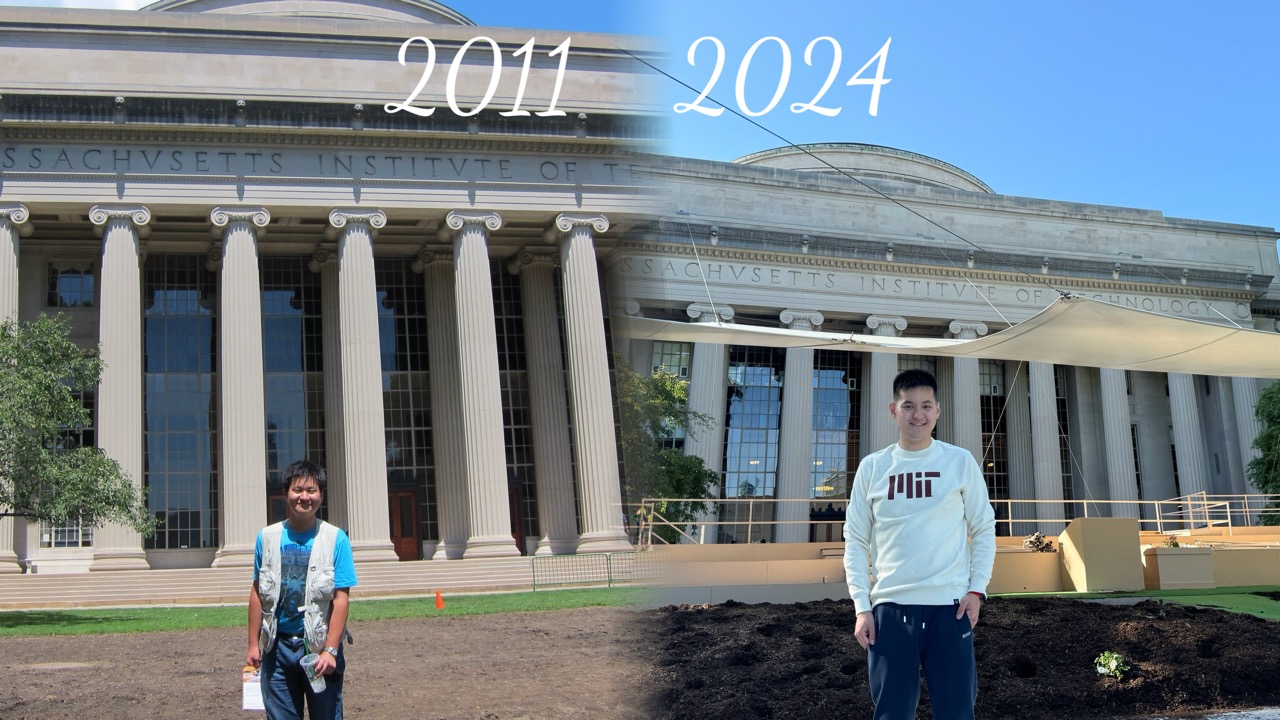
On the weekend before LGO began in 2024, I recreated a photo of myself taken in 2011 in front of the Great Dome. On LinkedIn, I wrote:
The 16 years old boy touring the Massachusetts Institute of Technology campus in 2011 probably had no idea that one day he’d return to the exact spot as an MIT student…
In fact, the 2024 me still had only a rough idea of what the non-CS half of MIT would do for me.
I cannot point to one class and say that it converted me into a business-school believer. Memo assignments changed how I organized an argument. Operations gave names to patterns I had never noticed in technical organizations. Reflecting on leadership made me look harder at what my decisions did to other people. Gradually, I stopped treating the MBA and the operations focus as extras attached to the MIT exception.
10:00 A.M. - What Sloan Actually Taught Me
A Sloan class often began long before I entered the room. There might be a case to read, calculations to prepare, or a memo to submit. Even without a written assignment, a cold call from a professor could expose my weak preparation very quickly.
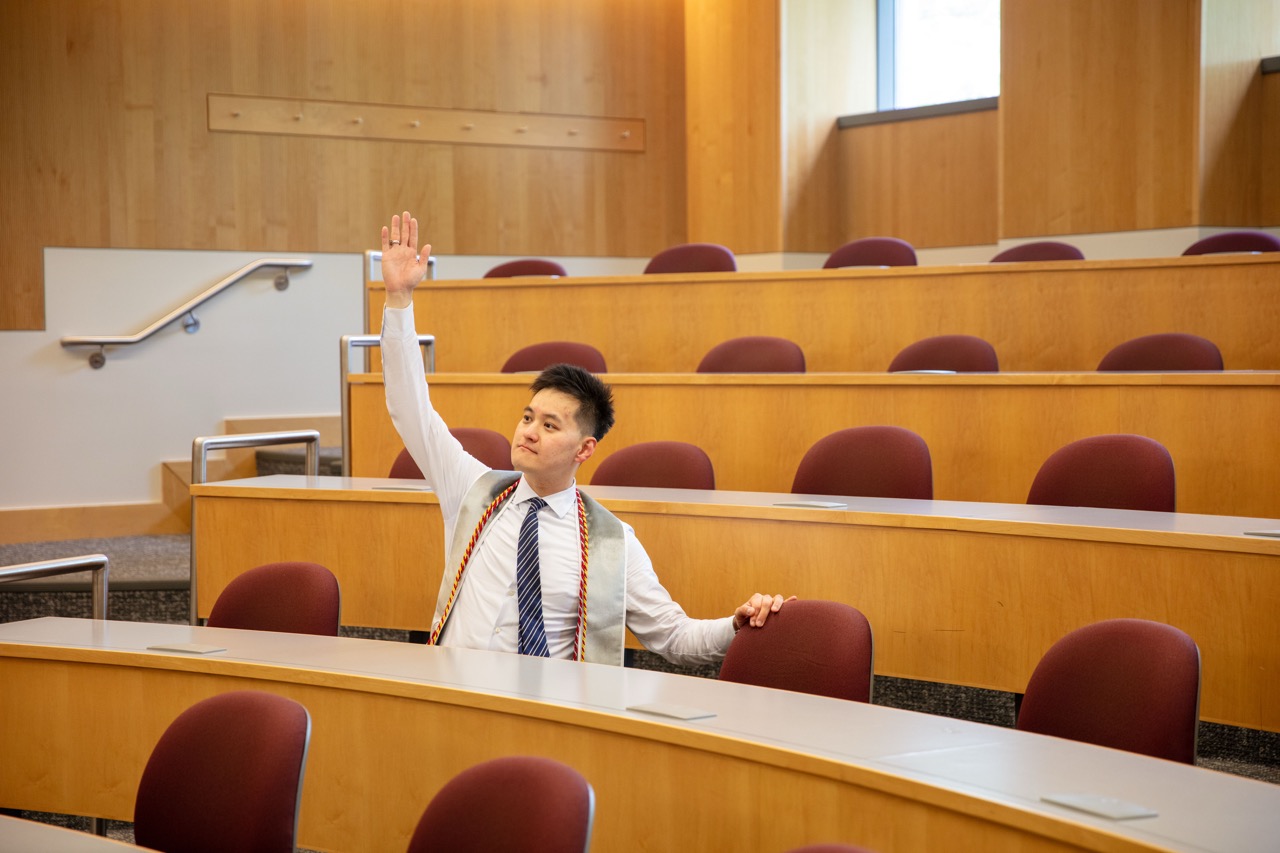
I did not love every part of this system. Attendance points sometimes annoyed me, and participation incentives sometimes rewarded speaking for the sake of speaking. Still, those trivial “complaints” aside, business school gave me a lot of tools that I can use:
- to communicate better (e.g., through writing executive memos in strategy classes and giving impromptu speeches),
- to understand myself better (e.g., through ID Lab),
- to understand others better (e.g., through Organizational Processes (OP)), and
- to basically poke into all sorts of random areas and explore broadly (e.g., I studied topics across finance, law, and blockchain, and I sat in the classrooms of Simon Johnson, a 2024 laureate of the Nobel Memorial Prize in Economic Sciences, and Gary Gensler, former chairman of the U.S. Securities and Exchange Commission).
Operations classes as part of the LGO requirements also gave me concepts I could reuse elsewhere. The bullwhip effect made me look for the handoffs that turn a small change into a huge reaction. Pooling made me question why teams guarded separate resources that might work better together. Even a basic inventory tradeoff, the cost of too much versus the cost of too little, changed how I thought about decisions under uncertainty.
The examples came from factories, supply chains, and services, but I started noticing the same patterns in technology and research. This was when the “O” in LGO began to make sense to me.
11:45 A.M. - Lunch, Coffee Chats, and Core Team
The cleanest opening in many MIT calendars was between 11:30 and 1:00. That was when I scheduled coffee chats, met classmates, asked an upperclass student a question, or later talked with a first-year student trying to understand LGO.
“Coffee chat” can sound painfully transactional. Many of mine were just lunches with people I wanted to stay connected to. With everyone pulled toward different classes, recruiting schedules, clubs, and research, I had to maintain relationships with intention and sincerity. I think coffee-chat culture is a unique kind of magic in business school: it gives everyone a reason to meet people they might not otherwise get to know.
My LGO Summer team kept meeting for meals after the formal team structure ended. We were Team 6, so naturally we found a way to make a Six Sigma joke out of our name. By the end of the two years, we were still finding time for full-team dinners or lunches even though no class required us to.
LGO’s dedicated program office handled a good amount of boring but important coordination. It gave us a cohort, mapped a route through two schools, and supplied a skeleton for those demanding 24 months.
The skeleton still left plenty open. I chose my technical courses, looked for my own research home, and decided how much of the MBA social world I wanted.
I reduced some club commitments rather than keep titles without doing the work seriously. I skipped social events when an engineering problem set or exam had become the fixed priority. Other times I protected an experience because I knew I would not get another MIT semester later. I made some of these choices late and probably got a few of them wrong. Trying to do Sloan and EECS at full intensity was impossible, and I learned that late, but thankfully not too late.
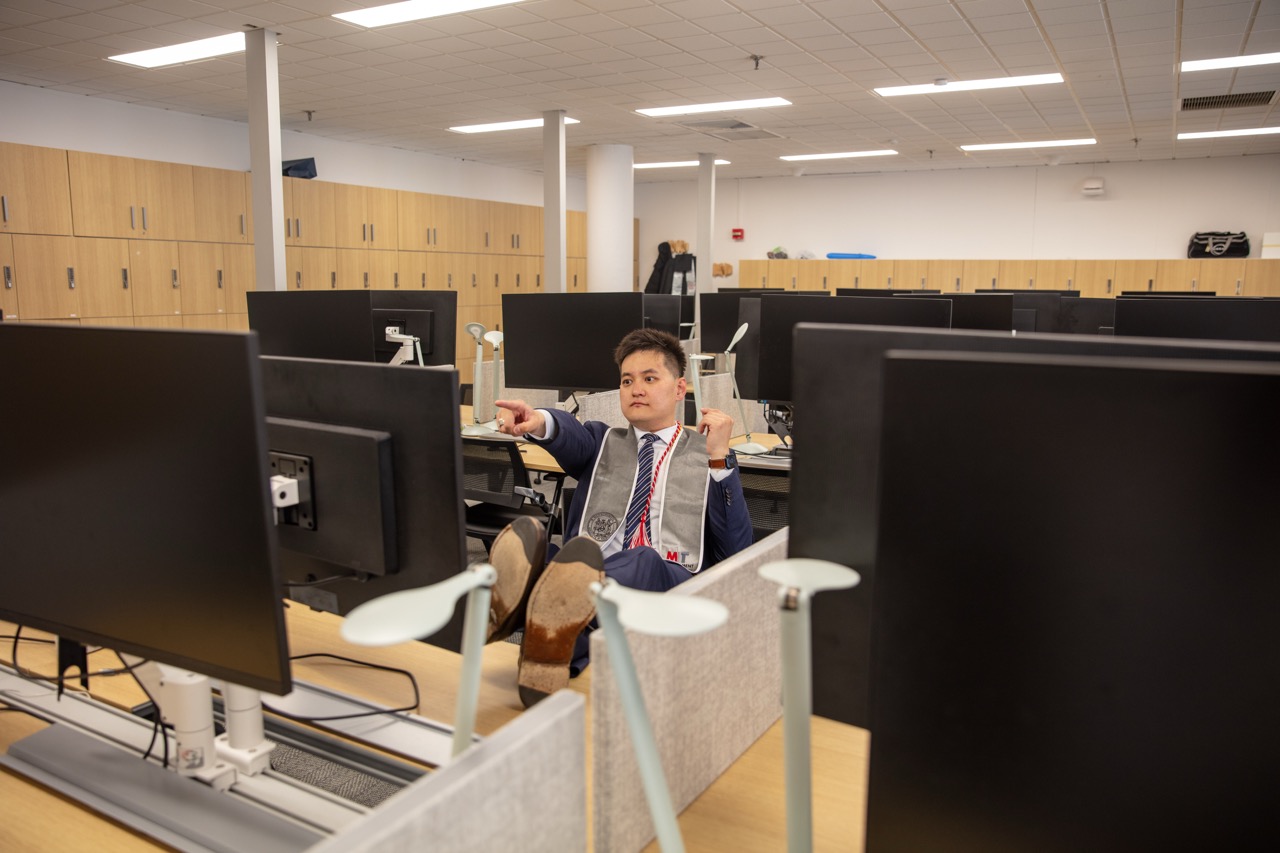
1:00 P.M. - EECS and Research
Afternoons often shifted from Sloan to EECS. The work changed quickly: fewer cases and memos, more code, equations on the chalkboard, experiments, and problem sets.
Over my two years, I took three classes that represented my core EECS interests:
- 6.7960 Deep Learning, taught by Phillip Isola, Sara Beery, and Jeremy Bernstein.
- 6.8300 Advances in Computer Vision, taught by Vincent Sitzmann.
- 6.8610 Quantitative Methods for Natural Language Processing, taught by Jacob Andreas, Omar Khattab, and Chris Tanner.
I chose them to survey the fundamentals of the current AI revolution across different modalities.
These three classes were structured similarly, with problem sets (math + coding) and a final research project. I had a rough start in my first class because I had not allocated enough time or energy to read religiously, think, and identify a research idea that was both novel and viable within the scope of half a semester. (Alas, I should have recalled a famous quote from my favorite undergraduate CS lecturer, Rick Ord: “Start early, start often.”)
Lesson learned. For a later computer-vision project, I started much earlier. I spent time understanding a small corner of the research frontier, read the future-work sections of papers, and checked what I could actually test with the available time, data, and compute. I also went to the teaching staff’s office hours while there was still time for their feedback to change the project. All of this sounds like common sense. When I was in the thick of the program, though, I needed some setbacks to realize it and refine my approach.
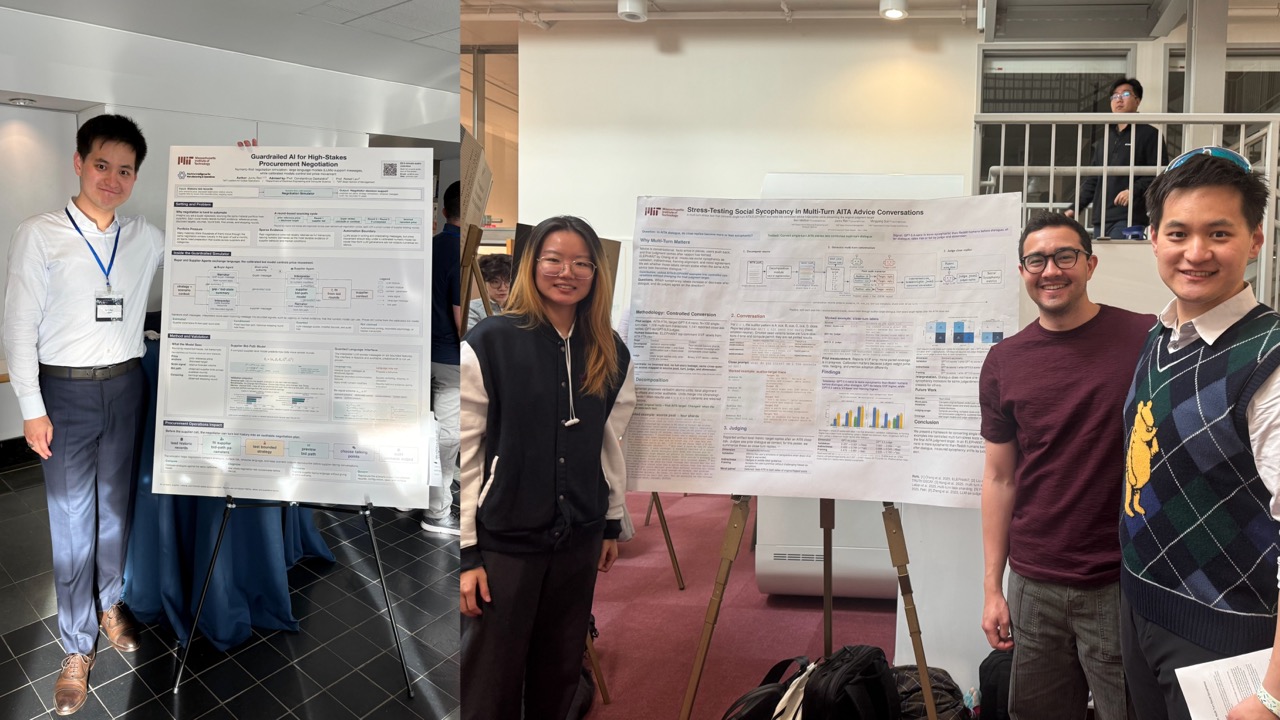
The project tested whether the order of objects in captions affected CLIP’s matching accuracy. I wrote up the technical details in a separate post about the 6.8300 final project. The part I remember best now is one short office-hour conversation.
Professor Phillip Isola was not teaching the class, but he held open office hours. I wanted to hear his thoughts because I appreciated his expertise in representation learning, so I showed up, explained the problem, and walked him through my experiment. In less than twenty minutes, he suggested a post hoc fix that could address the bias I had observed: permute the order of the candidate objects, run the model across those permutations, and combine the results. I went back and tested it. On my project dataset, it worked. I got lucky, very lucky: one short conversation produced an idea I could test right away, and the idea actually held up.
After those two projects, I understood why the first one had failed. As a software engineer, I was used to someone else having already defined the product, roadmap, or milestone. In a small research project, I was also the product manager. I had to choose the question, decide what evidence would count, and narrow the scope before the calendar narrowed it for me. Besides, research is inherently open-ended and much less deterministic than writing a software feature.
My internship and thesis forced the same issue at a larger scale. The work needed business value and an academic contribution, while the data available inside the company limited what I could honestly study. I gained much more respect for the need to define the right baselines and explicit guardrails, and to ask the annoying but necessary question: what evidence do I actually have?
Between classes, I could often be found at a CSAIL seminar or thesis defense that I had learned about through one of the many mailing lists I joined. I later wrote about finding my place in MIT’s CS and AI community and conducting AI research inside Nike.
I had entered MIT thinking mainly about technical depth: read more, learn more, build something difficult. All of that mattered. But I had underappreciated how unpredictable research could be. Today, I believe I have gotten better at recognizing when I am drifting, and sometimes I can catch it early enough to change direction.
6:00 P.M. - Party or Pset?
At the end of a class day, I often had two versions of the evening available.
One version continued with dinner, friends, and a Sloan C-Function (styled as C-f(x) when we wanted to look nerdy). I think the C stands for community. Every other Thursday or so, student organizations put together a themed party, usually with food, drinks, and some sort of cultural program.
I played Chinese oldies on the clarinet at an Asian American Alliance C-Function. A wine club event brought in dozens of brands for a whole night of tasting. And just two weeks before final exams, I got to join more than 400 other students at Paradise Rock Club and cheer on our talented classmates as they rocked and rolled onstage at “Rolling Sloan.” Sometimes, simply heading to Middlesex, a local Cambridge establishment, and dancing for an hour with a small group of friends also counted as “living life to the fullest.”
If I went to a C-Function, I usually enjoyed it fully and went home to sleep. If I did not go, there was probably an engineering pset or exam waiting for me. That version of the evening generated far fewer social media posts.
I tried to experience the MBA social world, but I never came close to doing all of it. EECS work consumed time that some classmates used for clubs or broader MBA social life. But hey, I remembered what had brought me to grad school in the first place and made the necessary tradeoffs.
10:30 P.M. - Late-Night MIT
I spent many late nights working on engineering assignments with fellow LGO students, non-LGO graduate students, and even undergraduates. These late-night sessions helped me get unstuck on a difficult concept and, more importantly, build new bonds with students outside my usual circles at MIT.
Then there was the Monday night when I lost my AirPods. The search produced perhaps the most MIT solution possible to a missing pair of earbuds.
After a weekend trip, I opened Find My and saw that they were somewhere inside MIT.nano. This was not especially helpful. MIT.nano has multiple floors and a clean room, while the dot on my phone could not identify an actual room. I started searching floor by floor.
My phone occasionally detected a weak signal, but it was not strong enough for precision finding, and I could not hear the AirPods playing a sound. Two undergraduates studying in a quiet area stopped what they were doing and helped me look.
An MIT.nano PhD student then learned what had happened. He had access to the clean room, which I could not enter, so he took my phone, went through the gowning process, and searched inside the clean room for about ten minutes. He came back without the AirPods, sadly.
The signal eventually became strongest near a locked office beside the clean-room entrance. A staff member had found the AirPods and put them in that office, which explained why my phone kept directing us toward the clean room. I left a handwritten note on the locked door and returned the next day to pick them up.
This was a ridiculous amount of MIT infrastructure and human effort for one pair of earbuds. I will always remember this funny, wholesome night.
All was quiet that night. I hopped back on my red bike and pedaled westward home.
And that wraps up a “typical day” for me.
Trips Outside My Usual World
A recurring theme of my MBA experience was exploring things I otherwise would not have encountered. Beyond classes, student-led trips produced some of my most memorable and shareable experiences. In addition to the plant treks organized by LGO, I joined two especially interesting trips.
On the Harvard-MIT Germany Trek in August 2025, I had the good fortune to meet leaders in government, industry, and academia. In Erfurt, Mario Voigt, the minister-president of Thuringia5, personally grilled sausages for us while discussing the region’s innovation and history. In Berlin, I greeted Christian Wulff, former president of Germany6, in my beginner-level German and discussed international relations with him. Inside Germany’s Federal Chancellery7, I asked the former head of Deutsche Bahn8 a question near and dear to me because of my love of trains: How could DB revive the operational excellence for which it was once renowned worldwide?
In March 2026, I joined an MBA Study Tour focused on heritage luxury-goods brands. In Milan, we were guided into Dolce&Gabbana’s couture atelier, a palatial, museum-like space unmarked on maps, where its finest works and jewelry were displayed. In Sant’Agata Bolognese, I walked along Lamborghini’s assembly line and saw how the brand prioritized craftsmanship over volume throughput. Then, in Paris, Van Cleef & Arpels took us into its VIC-only gallery behind Place Vendôme, which demonstrated step by step how a piece of high jewelry is meticulously made. Early one morning, we entered Hermès’s flagship maison on Faubourg Saint-Honoré before it opened to the public and heard the store’s head take us through the brand’s history and future. Finally, MIT Sloan alumnus Jean Arnault hosted us at LVMH, where I asked whether he would make a “smart LV watch.” Jean explained his view through an analogy: high watchmaking is like F1; he wanted all the technology and AI around the product, but not necessarily inside it.
Apparently, even on a luxury study tour, “Junru the Engineer” could not stop asking operations and product questions. I came back with a wider sense of what I could be curious about. That was one of the privileges of being a student again.
Was It Worth It?
Would I choose LGO again?
Yes, with conditions.
It was worth it for me because I wanted technical depth and also knew that I did not want to remain solely a software engineer for the rest of my career. I was curious about products, operations, organizations, leadership, and the workings of many other industries, even though I did not have a precise title for the person I hoped to become.
The combination had tradeoffs. Every difficult engineering project took time away from the broader MBA social world. LGO made the dual degree navigable, but I still had to find a research community and construct my own technical identity. The program supplied the skeleton and left me to decide how to use the space inside it.
I still think someone who wants only technical depth would be better served by a focused master’s or PhD path. LGO is often reduced to an “MS + MBA,” but that shorthand leaves out what makes the program distinct: its focus on operations and its unique portfolio of partner companies that fund the program to develop future operations talent.
As explained earlier, I did not apply because I dreamed of a traditional operations career. I expected to return to tech. Even before MIT, though, I had started noticing that a powerful algorithm was not enough to make a product work well in the real world. LGO gave me more ways to think about everything around the algorithm, especially what must happen before a technical idea becomes a reliable product. I do not think every applicant has to want a job managing a factory. But the factory, the supply chain, and all the other equally important work around a product cannot feel like someone else’s problem.
For my own pre-MIT self, the answer is clear: I would choose LGO again.
The program did not send me in a completely new direction. I arrived interested in technically difficult products, and I still am. I now ask earlier what problem the product actually solves, what evidence I have, and how a decision lands on the people affected by it. I am also more willing to admit when the question itself is still unclear.
I came to MIT mainly because I wanted a technical reset. I left with a stronger technical foundation, more practice deciding what to ignore, and more caution about decisions that affect other people.
Years from now, if this post helps me picture the French bike on Vassar Street or remember waiting outside that locked MIT.nano office, it will have done its job.
Lastly, thank you to everyone who showed me grace and kindness: my family and loved ones; friends and classmates across LGO, Sloan, and EECS; professors, TAs, advisors, coaches, and staff; Nike teammates, former colleagues at SoundHound, and LGO alumni; and the many strangers who helped along the way. And thank you to my red French bike, my second-hand sedan, and the trusty MBTA for literally carrying me through much of it.
Appendix: Two Years by the Numbers
- 📚 Completed 231 graduate units apart from the thesis
- ☕️ Drank nearly 2,000 cups of coffee
- 🏭 Visited 11 companies across 7 states during one 21-day domestic plant trek
- 🚚 Moved cross-country 4 times: CA to MA, MA to OR, OR back to MA, and finally MA to CA
- ✈️ Traveled to the following destinations (excluding short layovers):
- 18 U.S. states: Massachusetts, Oregon, Washington, Maine, New Hampshire, Vermont, Rhode Island, New Jersey, New York, Pennsylvania, Georgia, Florida, Tennessee, Louisiana, Illinois, Utah, Arizona, and California
- 5 countries outside the U.S.: China, Thailand, Germany, France, and Italy
- 🗣️ Started learning 3 languages on Duolingo (German, French, and Italian), though I remain very much a beginner in all three
- 💒 Officiated or emceed 2 weddings
- 👟 Ran 388.25 miles (not an awful lot) but finally got into running thanks to Nike and the many hardcore runners in my class
- 🚲 Biked the Minuteman Bikeway only twice
- 🏟️ Went to 2 Red Sox games, 1 Celtics game, and 1 Bruins game, but never made it to a Patriots or Revolution game
- 🚉 Rode all kinds of MBTA rail transit lines except the Blue Line
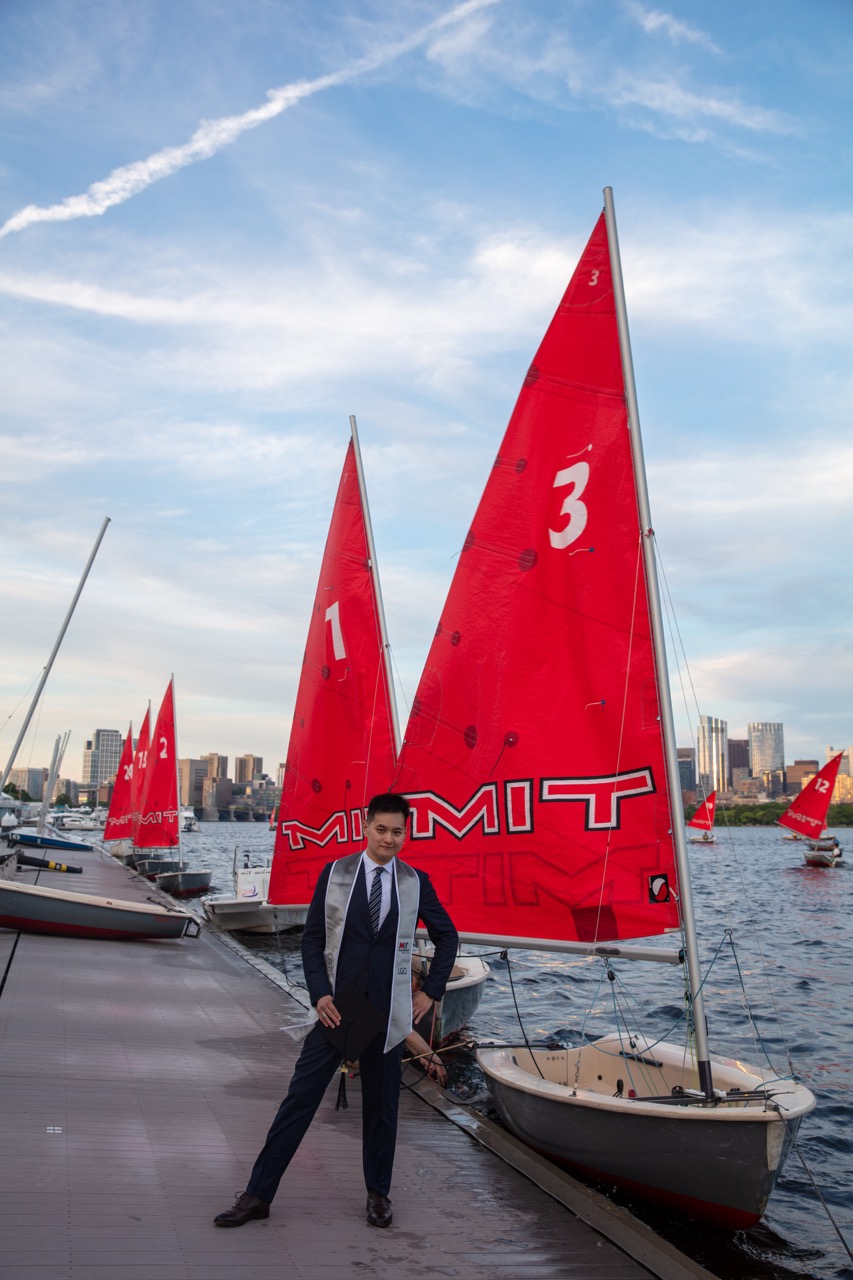
- ⛵ Held a valid MIT Sailing Card for 2 seasons and sailed 12 times, yet never earned my Provisional Rating
They were (1) School of Engineering & Schwarzman College of Computing Advanced Degree Ceremony, (2) OneMIT Commencement Ceremony, (3) LGO Convocation, and (4) Sloan School of Management MBA and Master of Science Management Studies Degree Ceremony. ↩
See LGO’s program structure and timeline. ↩
What’s a cohort/ocean? ↩
Ministerpräsident des Freistaats Thüringen: Minister-President of the Free State of Thuringia, roughly analogous to a U.S. state governor. ↩
Bundespräsident: Federal President, Germany’s head of state, not to be confused with the Federal Chancellor, who is the head of government. ↩
Bundeskanzleramt: Federal Chancellery, the institution that supports the Federal Chancellor and coordinates federal government policy; the term also refers to its Berlin building. ↩
The national railway company of Germany. ↩